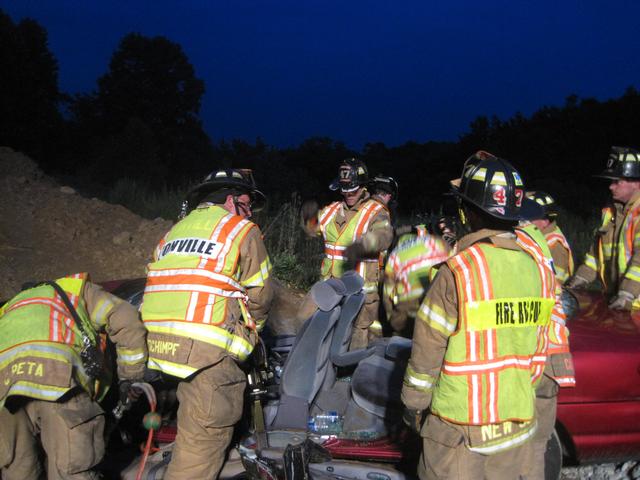
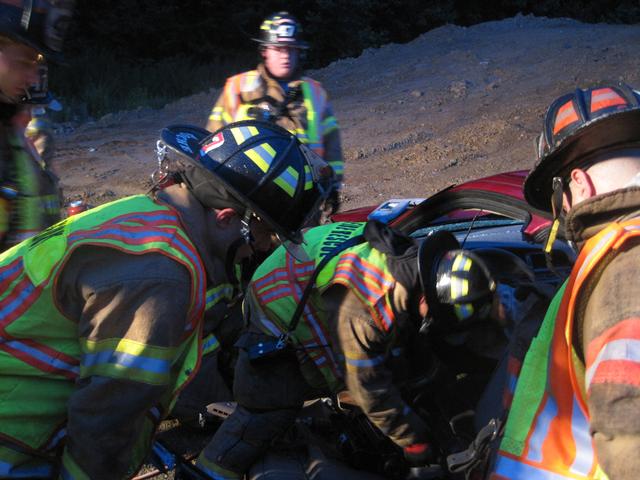
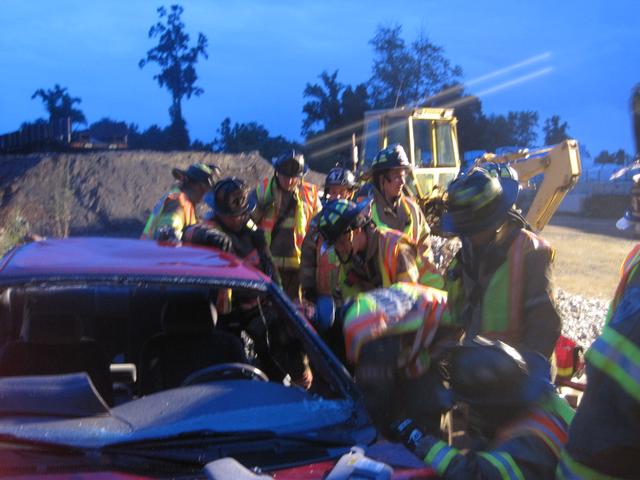
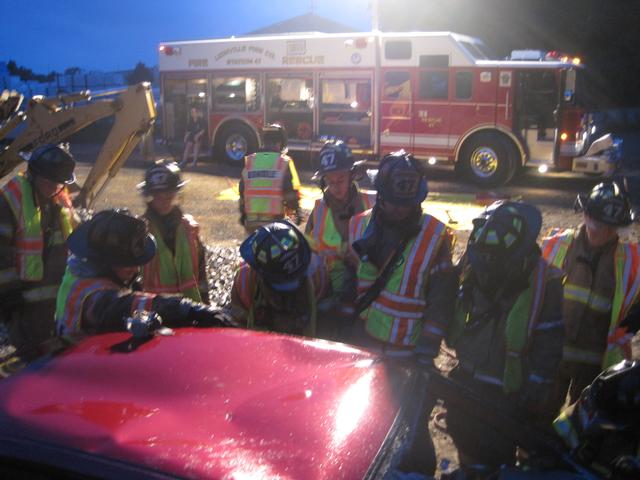
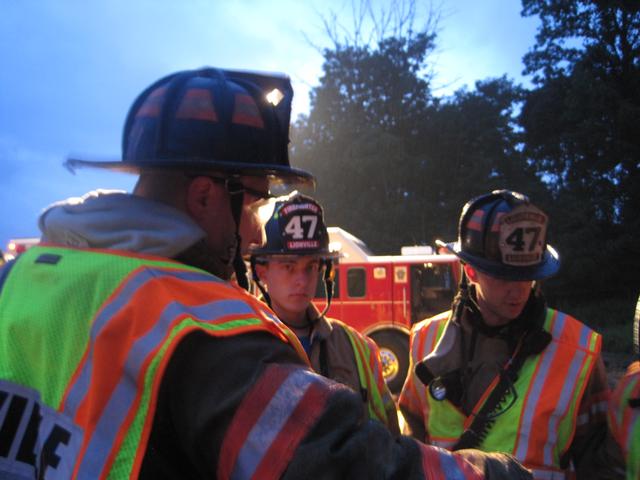
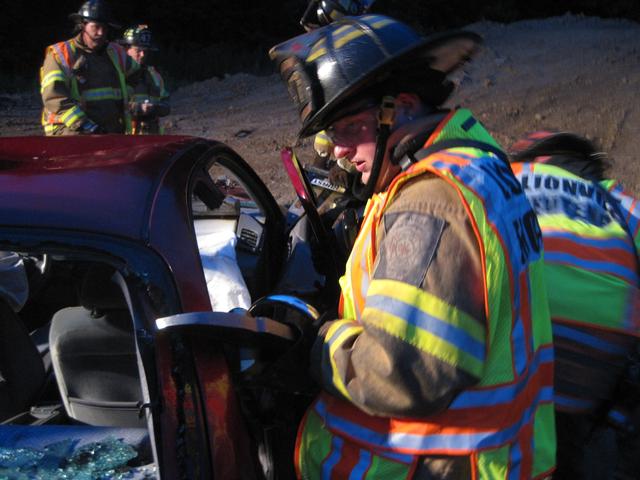
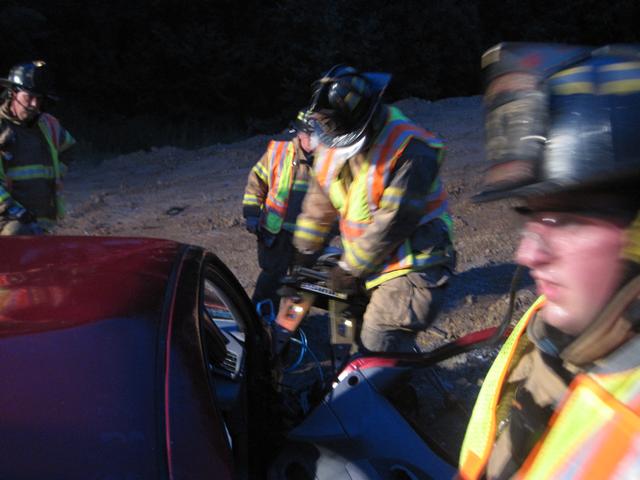
| Each and every Thursday, the Lionville Fire Company continues its commitment to be one of the best trained departments in the county. This past Thursday, members in attendance took part in VRT (Vehicle Rescue Training). Aside from traditional fire suppression, another area the Lionville Fire Company works diligently at enhancing knowledge and cadence is Vehicle extrication, which is the process of removing the vehicle from around a person that has been involved in a motor vehicle accident. This training evolution comes into play when conventional means of exit are impossible. A delicate approach is needed to minimize injury to the victim during the extrication. This operation is typically accomplished by utilizing chocks and bracing for stabilization and hydraulic tools, including the Jaws of Life.
It's also important, that as a company, we educate ourselves on the additional risks with new technologies in the auto industry, such as airbags, make cutting into a vehicle more complicated: when they are not set off during the accident (e.g. in a vehicle struck from the rear or a rollover), extrication operations may set them off. This can cause additional trauma to the accident victim or to the rescuers. Airbags can remain active anywhere from 5 seconds to 20 minutes after being disconnected from the car's battery. This is one of the reasons rescuers disconnect the vehicle's battery and wait before cutting into a vehicle.
New hybrid technologies also include additional high voltage batteries, or batteries located in unusual
places. These can expose occupants and rescuers to shock, acid or fire hazards if not dealt with correctly.
These are things members have to think about in sizing up and approaching any incident involving a vehicle accident and or fire. The message delivered was to take time to think about what your approach should be in the event such and accident occurs.
Check back for my features on our ongoing training programs. |